
The view from my window
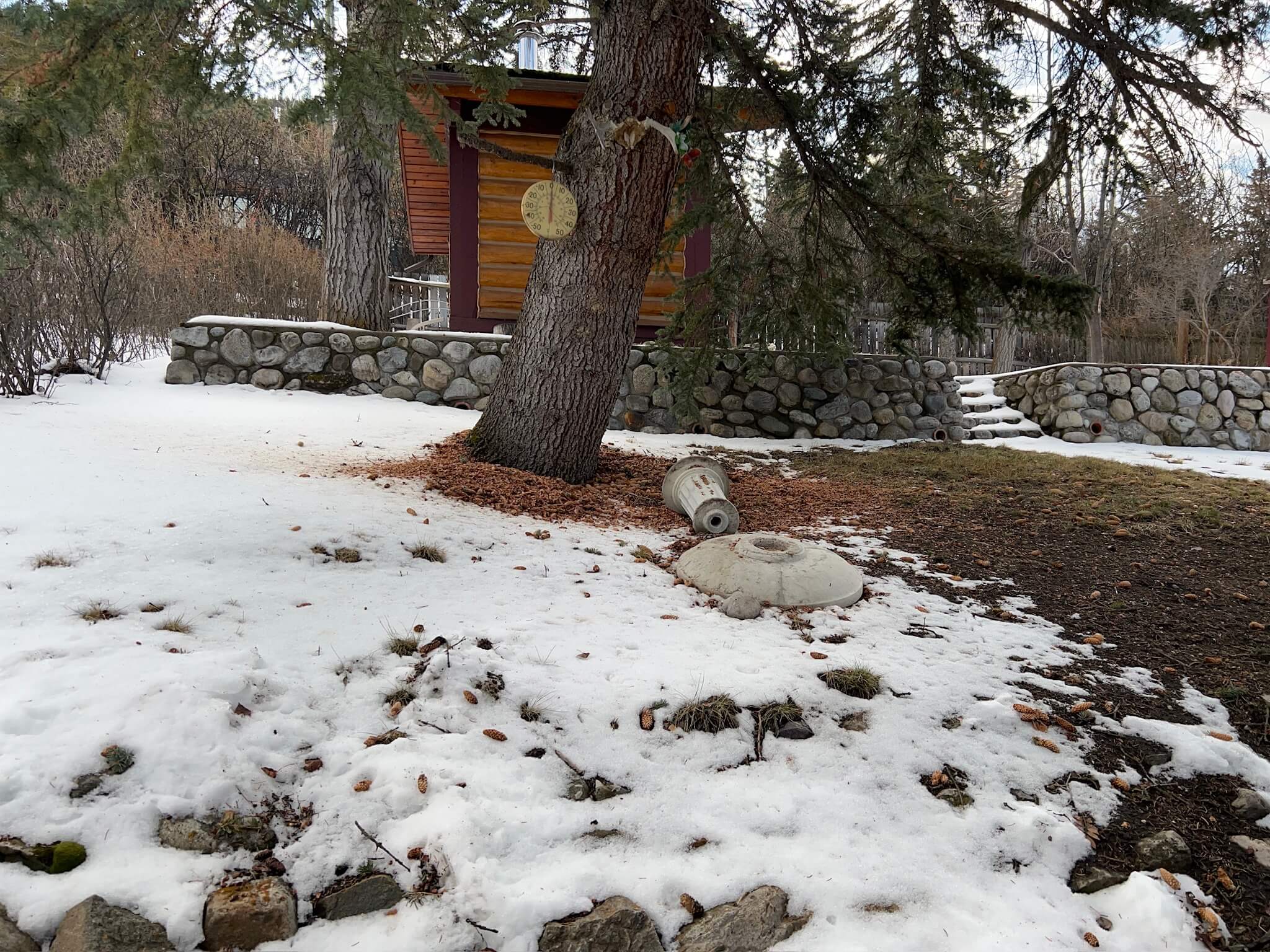
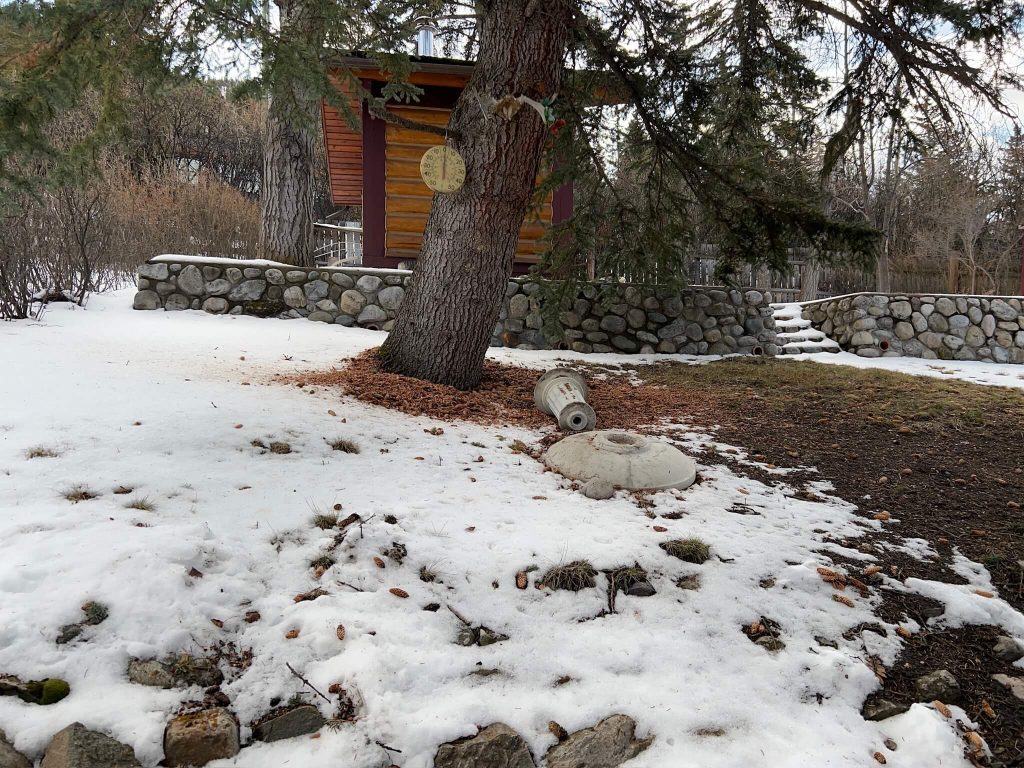
It’s Easter weekend, and I have my hands plunged into warm soapy dishwater, staring out my kitchen window. A week ago, the bird bath fell over and that’s the centrepiece of my sad and disappointing view, today. The thermometer registers zero degrees. The forecast predicts more snow on Tuesday, but today the sky is low and the morning light is a soft grey.
Spring is an unpredictable season, at my latitude. In early April we seldom find daffodils or tulips or narcissus shoots poking out of the ground. Rather, April usually delivers wind, rain, snow and swings along a continuum of colours that are mostly grey, brown, tired and muddy. In my locale, the weather can shift from full sun and fabulous blue sky, with the promise of spring skiing in the morning, ricocheting back to winter white-outs, slippery sidewalks, low visibility, with the risk of cars sliding off the road by nightfall. That said, we see occasional patches of green grass poking out, in the shadow of a sunny patch protected by a warm building.
Suddenly, I am looking t a mixed flock of birds scavenging around in the pile of husks, cones and seeds that the squirrel has created. Redpolls, Crossbills, Juncos and Red-Breasted Nuthatches are flitting around the squirrel’s midden — a kind of trash heap created by our resident exuberant and effervescent red squirrel who has set the table for a feast for foraging birds. Spring brings extra motivation to our small forest friends – squirrels who can leap up to 10 times their body length and migrating flocks that arrive and leave within moments, based on wind and weather, predators and change.
When I walk out the door, I am scolded, chirped at, trilled to and spoken to by our indignant squirrel. Curiously, the Red Squirrel’s foraging technique is called “scatter hoarding” and I am amused. How is it possible to simultaneously hoard and to scatter? In the case of the squirrel, their spatial memory helps them to remember and relocate their hidden caches. I guess it’s like putting away winter clothing and storing items that we can find again next winter.
We didn’t witness it, but we have theorized that the concrete bird bath toppled, thanks to the our Rocky Mountain spring cycles of freeze-thaw-freeze and ground heaving. We wondered if an elk or deer wandered into the yard helping the thing to topple, but I suspect the trigger was a long, slow gradual tilt that created a lean and angle that passed the tipping point. I tried to right the thing three days ago, but it was frozen in place. I couldn’t budge either the bowl or the pedestal of the sad display which reminds me of a broken Greek statue, no arms, no nose, and as I listen to the moring news on CBC, I consider my view as an omen of the state of the world. The phrase: “when thing fall apart” comes to mind. Then I remember the Mary Oliver poem:
It doesn’t have to be the blue iris,
it could be weeds in a vacant lot,
or perhaps a toppled bird bath…
 It doesn’t have to be the blue iris,
Paying attention, staring out the window, listening to the news, allowing my mind to wander, always alert for “the doorway into thanks”, I dry my hands, words jangling and I respond to the morning by taking inspiration from Mary Oliver’s Prayer:
It doesn’t have to be the squirrel,
it could be his midden of cones and scales and husks and seeds
or the mixed flock of Redpolls, Crossbills and Nuthatches
It doesn’t have to be the squirrel,
it could have been the seeds or accidental flocks of birds
that toppled my statue
ground thawing and heaving
wet and muddy at Easter time
grateful for low skies and accidental migrations
Journal writing doesn’t have to be perfect to be therapeutic. Writing can put you into another frame of mind, one that is more hopeful and helpful, a kind of self-directed therapy for the soul on a Sunday morning.
Poetry is a great way to spark a morning writing session.
What few words would you like to patch together today?
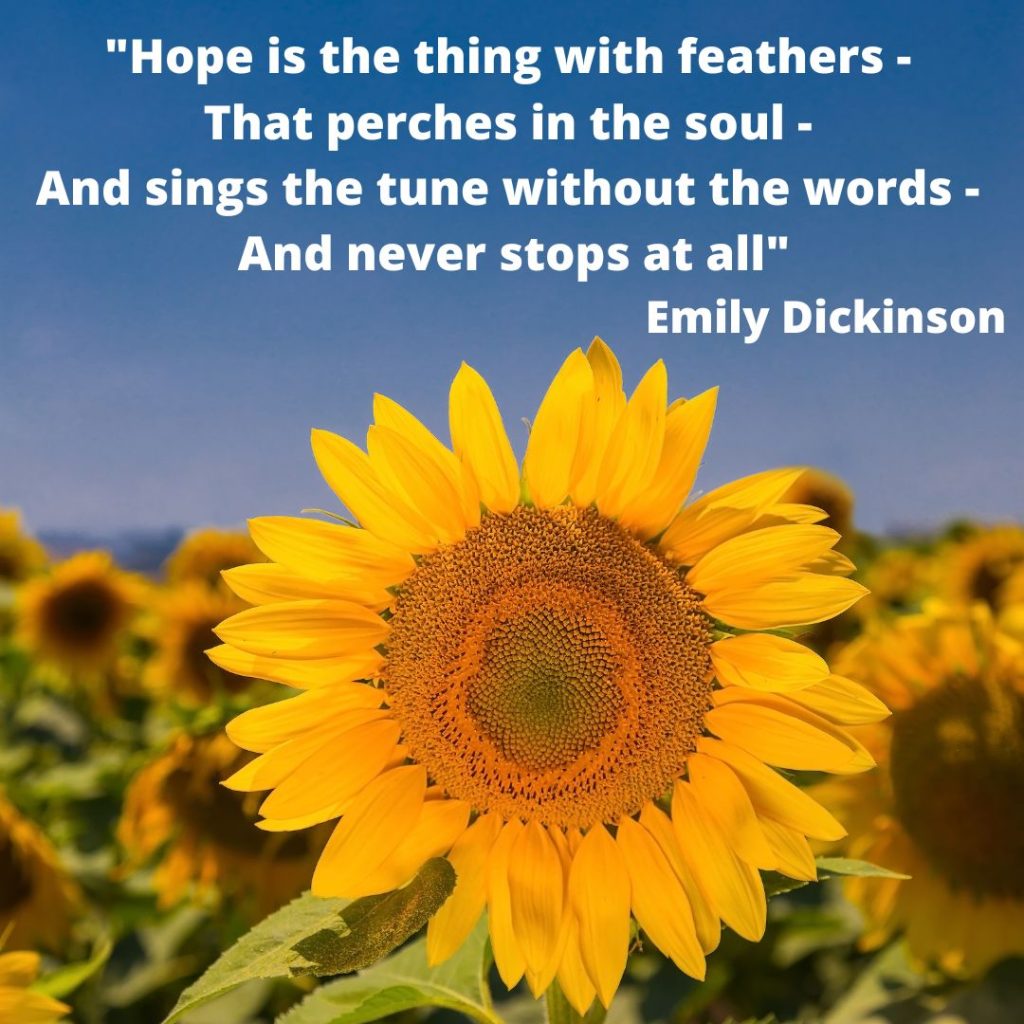
Prompt: Open a book of poetry and see if one sparks a voice hiding in your soul. If it isn’t a blue iris, try patching some words together as you reflect on Easter, Spring, Fallen Objects, looking for the kind of Hope that Emily Dickinson describes.
Start with this Springboard: Hope is like… and then keep writing.