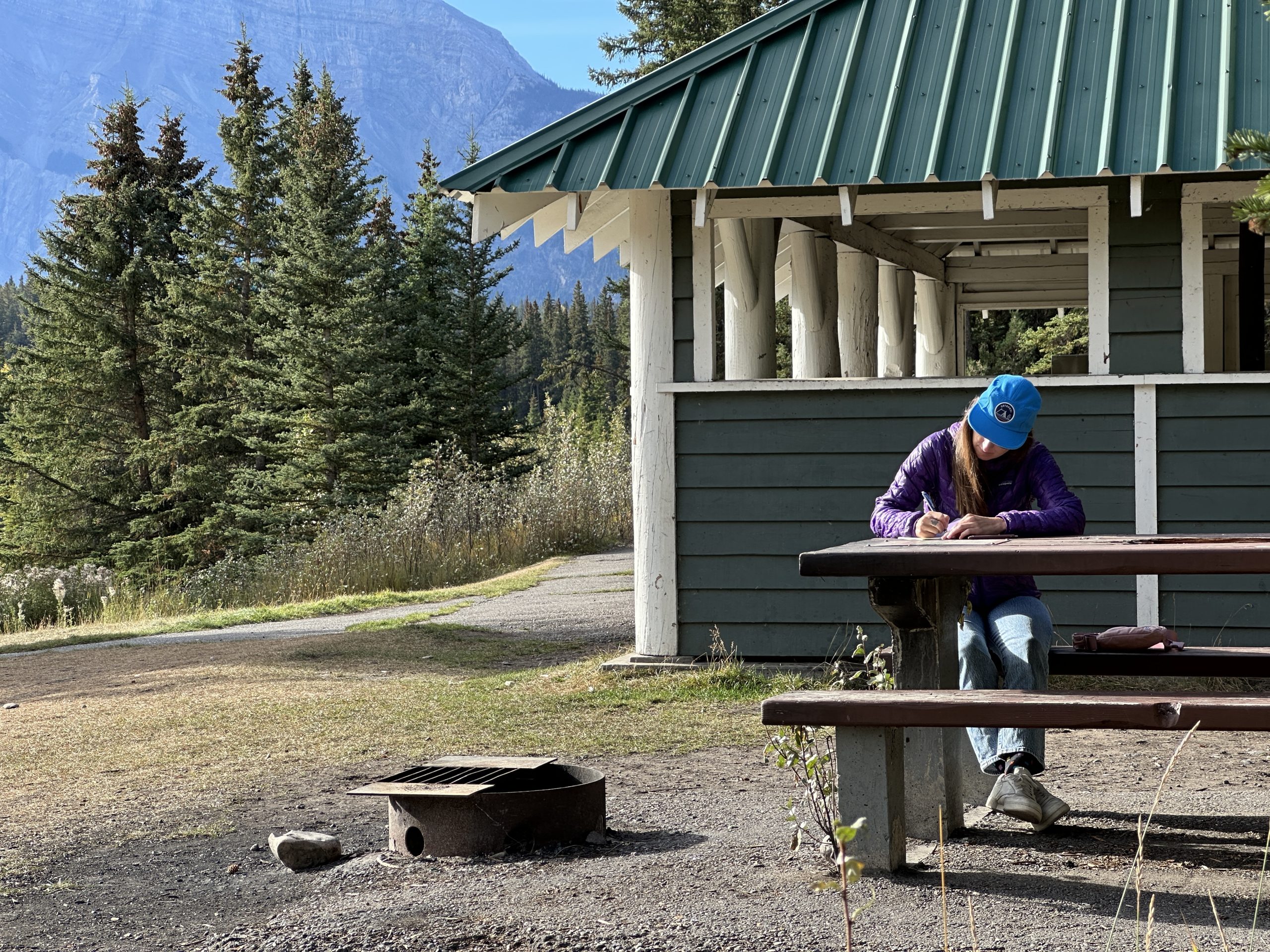
Surely, you know how it goes when writing to a stranger for the first time. It’s an awkward moment of effort, attempting to organize thoughts, craft an opening, hoping to make a good first impression, and find the words that will attract the attention of you:
Dear Reader,
Maybe I should just dive in and say — Congratulations! I loved your book The Other Side of Change: Who we Become When Life Makes Other Plans Well done! This book is an honest and heart-wrenching account of the impact of Change and how everyone must face it on their own terms. We all need to navigate change and challenge, because changes happen: Every. Single. Day.
Maya, your book illustrates how people face unexpected and unwanted changes with a narrative arc that illustrates — change requires effort, transition, adjustment, recalibration and realignment of pretty much everything that used to be considered normal. Change has impacts that may be physical, emotional, political, financial, or social. Ultimately mental models and expectations get turned upside down and things have to shift.
Your series of in depth interviews introduces us to everyday heroes who are forced to reconcile their lives under exceedingly difficult change mandates. There is loss, disappointment, frustration, loneliness, and our heroes must endure long uphill journeys. We meet people who must grow into their future selves by moving beyond their “once upon a time a normal lives” with profound grit, strength, and courage. They each enter a phase of becoming, quite unwillingly, and they must commit to living into a future self that was once unimaginable, certainly undesirable, when we first meet them.
You also give a strong nod of affirmation to the importance of networks of support in a community with the right people, in order to navigate change with optimal outcomes.
Your book weaves the stories of real people with your personal experience, anecdotes, research and expert insight, as a cognitive scientist. With a professional understanding of the psychology and social science you help us understand change in view of various narratives that have been ground-truthed and authentic. As readers, we meet different people navigating change in different ways, and ultimately find ways to meet the demands of life “on the other side.” Happily, your stories also support the case for a sense of joy as a possible outcome — even when the triggering situation is grim, undesirable, and unexpected. Some of the change scenarios you show us could be labeled traumatic but over time, with patience, inner resolve, encouragement, and systems of support (informal and professional), our heroes demonstrate that post-traumatic growth is possible.
I was most deeply touched by the stories and concepts that you present in Chapter 2: Possible Selves.
The protagonist for this chapter is Dwayne Betts, a 16 year old, who was navigating the struggles of a hard scrabble life, with temptations and companions who are teen-agers living on the margins of mainstream. Sadly, on one regrettable occasion, Dwayne makes a serious lapse of judgement in the company of some peers he wants to impress. He is apprehended by the police and sentenced in a court of law, to a nine year jail term in adult prison. During Dwayne’s incarceration, our naïve and inexperienced young hero has no choice but to spend lonely hours, reconciling with his past with his fate. He must face his fears, his sadness, his remorse and shame by spending time in a worried state of high alert and hypervigilance.
During his time, Dwayne is also put into solitary confinement and forced to endure living in a “man-sized dog kennel”. Ironically, it is under these inhumane and dismal conditions in solitary, that he finds a modicum of relief and comfort. In solitary, he is temporarily protected from the threat of physical violence posed by other inmates. Additionally, by this time he has met a fellow prisoner Bilal who is a dignified man who has held on to his self-respect and humanity. Bilal is a mentor who demonstrates generosity and kindness to others. You write Dwayne realizes that:
even in the brutal conditions of prison, you could still choose to carry yourself in a certain way, to embody a set of values…
This is so incredibly touching. To imagine a young man sitting in solitary confinement, in a darkened cell with garbage bags taped to the window, trying to keep the insects and rain out of his cramped living quarters. It is so ironic that in this state, when he is completely cut off from any human connection or semblance of a normal life, he also finds the mental strength to examine his life. Without the threat of other prisoners who act as predators he can relax a little bit. His mind can imagine a future, with other better possibilities and envision possibilities that are more hopeful. In solitary confinement and what could be considered the worst of times, he imagines a better time. Now, as an antidote to sinking into despair, he chooses to write letters. And, he writes them to Bilal:
It was Bilal who, in his distinctly tidy penmanship had first reached out to Dwayne, after Dwayne was moved to solitary… More than a man, Bilal represented an idea to me” Dwayne wrote, “of what it means to be lovely.”
By writing, small cracks of light appear in his imagination and he realizes that he must fight against the dark forces that surrounded him. Writing letters becomes his tool of choice.
The only thing that kept Dwayne from despair was his commitment to writing.
At one point, while still in solitary, he bravely calls out, Could someone send me a book? Remarkably, there are kind forces lurking beyond his dank cell, and surprising a book is slid under his cell door.
First, a Readers Digestanthology arrives. Dwayne stays up all night reading. On another occasion, a crisp and brand new anthology, titled The Black Poets, is delivered to his cell. The book is full of poems describing people he can identify with, and his imagination is ignited. Dwayne now becomes a case study of what can happen when an individual begins to imagine himself in a more positive light. Our hero is now on his way to becoming a free and positive member of society. His first aspiration: To become a published poet which he achieves, while still incarcerated.
Dwayne’s story affirms that reading and writing are the processes that can helped us hang on to our humanity and imagine a brighter future. This chapter also gives reference to various psychological scientific concepts such as: moral elevation; the fresh start effect; temptation bundling; and peak-end rule.
Following his release, Dwayne completes his high school education, keeps studying and writing and in time, he graduates from Yale Law School. Dwayne uses his skill to support others with the wisdom of his experience, and he is privileged to sit on an advisory task force convened by President Obama. He continues to read and write and learn and grow, and resist his feelings of despair. You tell us that
writing is a way for Dwayne to process both the atrocities and the humanity he observed while in prison.
So, here’s to you, Maya with your gentle encouragement to find the grace and patience to recalibrate our mental models; to accept the kindness of strangers at face value; to cultivate relationships with the right people and to be brave when disappointment, frustration, and unwanted change have landed on our life’s doorstep.
My hope? That we all keep reading and writing with open minds. That we keep learning and growing and pushing hard against the forces of despair when change upends our world.
Thanks for writing a book that is authentic, truthful, generative, grateful, life-affirming, uplifting and hope-filled. Also bravo to Dwayne and to all of the people you interviewed for leading the way to a more life-affirming and grateful narrative.
Here is to a strong community of writers and readers and thoughtful people who choose to face change with a positive reframe. Here is to our strong networks of support that are strengthened by other good people, and we can all alter our gaze to the better.
#gratitude
P.S. I also love the anecdote you tell of your dear sweet Jimmy, who came into the bedroom on that night that you had cocooned yourself into your bedding, wanting to escape the devastating and life-altering news. There came Jimmy, brightly suggesting that you look for some reasons to be grateful. As much as you must have been feeling angry, shattered, overwhelmed and a little bit furious with him, you recognized him as your lovely and wonderful life partner who was trying to comfort you. Then, from your despair, you dug deep and started listing some glimmers that were small beacons of light in the darkness. So remarkable — both of you. Please say hello to Jimmy!
Now, back to the idea of Possible Futures:
You might do a hundred other things, but if you fail to do the one thing for which you were sent it will be as if you have done nothing.” Rumi
Have you done “your one thing” yet? Here is a writing prompt, inspired by Maya Shankar’s book: The Other Side of Change: Who we Become When Life Makes Other Plans. Over the course of five days, in early July, make time to explore this four-part grid. Watch your words and thoughts shape-shift and change. Keep looking for glimmers, for feeling of moral elevation, wonder and enjoy the process of writing reflectively.


 The protagonist for this chapter is Dwayne Betts, a 16 year old, who was navigating the struggles of a hard scrabble life, with temptations and companions who are teen-agers living on the margins of mainstream. Sadly, on one regrettable occasion, Dwayne makes a serious lapse of judgement in the company of some peers he wants to impress. He is apprehended by the police and sentenced in a court of law, to a nine year jail term in adult prison. During Dwayne’s incarceration, our naïve and inexperienced young hero has no choice but to spend lonely hours, reconciling with his past with his fate. He must face his fears, his sadness, his remorse and shame by spending time in a worried state of high alert and hypervigilance.